
A torn ACL is an issue that must be seen and evaluated by your veterinarian. Once it has been diagnosed, there are options to choose from depending on how bad the tear. My goal in this blog is to describe what it is and to discuss how massage can aid your pet during recovery from surgery, or if surgery is not required.
Ligaments are stretchy bands of tissue that connect bone to bone. They work like rubber bands to hold the knee bones in the joint together when your dog moves. The Anterior Cruciate Ligament (ACL) is one of four ligaments in the knee joint. The ACL is located in the center of the knee and is responsible for stabilizing the hind leg when your dog is bending, straightening and rotating his legs.
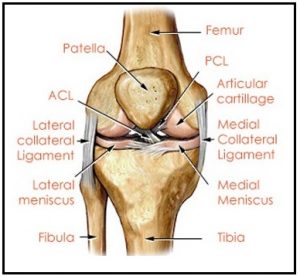
When an ACL is “sprained”, which is a minor injury, they tend to progressively worsen over time as they rarely heal on their own. The longer treatment is delayed, the higher the risk of other complications like arthritis.
To help keep your dog comfortable after injuring the ACL, you will want to provide soft supportive bedding to help their joints, use ramps to help your dog get in and out of the car or onto the bed, put down carpets and secure rugs to help your dog have traction on slippery surfaces.
If your dog has surgery, or with a very minor ACL injury, the vet may prescribe low-impact excercises. In both these cases, massage can be a support to other modalities.
When your dog has an injured limb they obviously use it less. When they are using one limb less, other limbs, and muscles, take up the slack. This can cause trigger, and stress, points to develop in the muscles of the limb being used more, and in the case of hind limb injuries, the muscles of the neck and shoulders can be strained. Massage can help support those compensating muscles by keeping lactic acid from building up that can lead to pain, and down the road, arthritis.
For more information, and where material was obtained for this article, visit:
http://canna-pet.com/torn-acl-dogs/
http://pets.webmd.com/dogs/acl-injuries-in-dogs#1

 Paws and Relax Pet Massage Blog