Maintaining your Fur Friends Health through Professional Massage

The maintenance massage is perhaps the most common type of massage and one of the most valuable. The intent of this type of massage is to help a healthy pet stay at a specific level of work for as long as possible and as safely as possible. Many pets may start out with a rehabilitation or performance massage and progress to a point where a maintenance massage is sufficient. The primary goal is to decrease muscular tension. Other physical benefits include:

* The removal of metabolic waste;

* Release of naturally occurring endorphins to help with discomfort from a workout;

* Lengthening of the muscle fibers to decrease the chance of overuse/stress related injuries;

* Improved immune function; and

* Regular monitoring to lead to early detection of chronic conditions.

The typical candidate for a maintenance massage is any animal who has a regular routine or activity level. These include your companion animals, healthy athletic animals, geriatric pets and working animals (scent dogs, police dogs, assistance dogs) in the normal course of duty.

Maintenance massages are scheduled one to two times a month, and are designed around the needs of the pet and your budget. To schedule an appointment visit https://pawsandrelax.massagetherapy.com, and for a free introduction to massage video visit our site at https://youtu.be/_OwczdfoPHA.

The Physiological Benefits of Massage for your Dog or Cat

Massage benefits all systems of the body. It helps improve circulation, eliminate toxins and provide emotional calmness. It is a good thing to do to support the overall health and well-being of your dog or cat. Professional massage is “touch with intent” using a specific protocol of techniques, pressures, and joint movements which involves manipulating and stretching all the body’s soft tissues. Massage has the ability to facilitate healing within our pets.

The following is an overview of the impact of massage by each system of the body of your pet.

Circulatory System: Massage encourages development of stronger cardiac muscle, improves oxygen supply to the brain, and can decrease blood pressure.

Digestive System: Massage relaxes the intestinal muscles, improves blood flow to the digestive tract, stimulates liver and kidney function, and can improve appetite.

Muscular System: Massage relaxes or stimulates muscles to relieve soreness, tension, stiffness and weakness. It mobilizes the soft tissues, and improves joint flexibility.

Nervous System: Massage can help relieve pain, stimulate motor nerves, relieve restlessness and sleep disturbances, and improve proprioception (awareness of the movement of the body).

Respiratory System: Massage can improve respiration.

Lymphatic System: Massage can drain stagnant lymph nodes, and stimulate movement of the lymphatic fluid.

Integumentary System (Skin): Massage improves tone and elasticity of skin, stimulates follicular oils and sebaceous glands which improves the quality of the coat, and removes dead skin and loose hair.

Skeletal System: Massage can improve alignment of skeletal muscles without force, and is wonderful done in conjunction with chiropractic care.

And in all the systems, it helps to remove toxins which helps the body to stay healthy and functioning at the highest level. If massage can do all this, why not invest in a monthly maintenance massage for your pet. Paws and Relax Pet Massage offers complimentary assessments before developing a massage plan, so connect with us today at pawsandrelaxpm@gmail.com.

Hip Dysplasia & Massage

Hip Dysplasia is an inherited condition resulting from an improperly formed hip joint. Because the joint is loose, the dog’s leg bone moves around too much, causing painful wear and tear.

Some cases are mild, but if your dog seems hesitant to excercise, stand on his hind legs or climb stairs, as well as limping, or bunny hopping, you should take your pup to the vet for a diagnosis.  Each case is different and may become more noticeable in dogs in their middle or later years, but it begins to develop in puppies of five months old.  Larger breeds of dogs are commonly affected including German Shepherds, Bulldogs, Mastiffs, St. Bernards, Retrievers and Rottweilers.  Dogs of all breeds and sizes are susceptible.

Because Hip Dysplasia is caused by an inherited defect, there are no products to prevent its development.  You can help your dog by a combination of a healthy diet, maintaining a good weight, excercise, massage, warm and dry sleeping areas, joint supplements, and potentially prescription medications from your vet.  Surgical options are available as well.

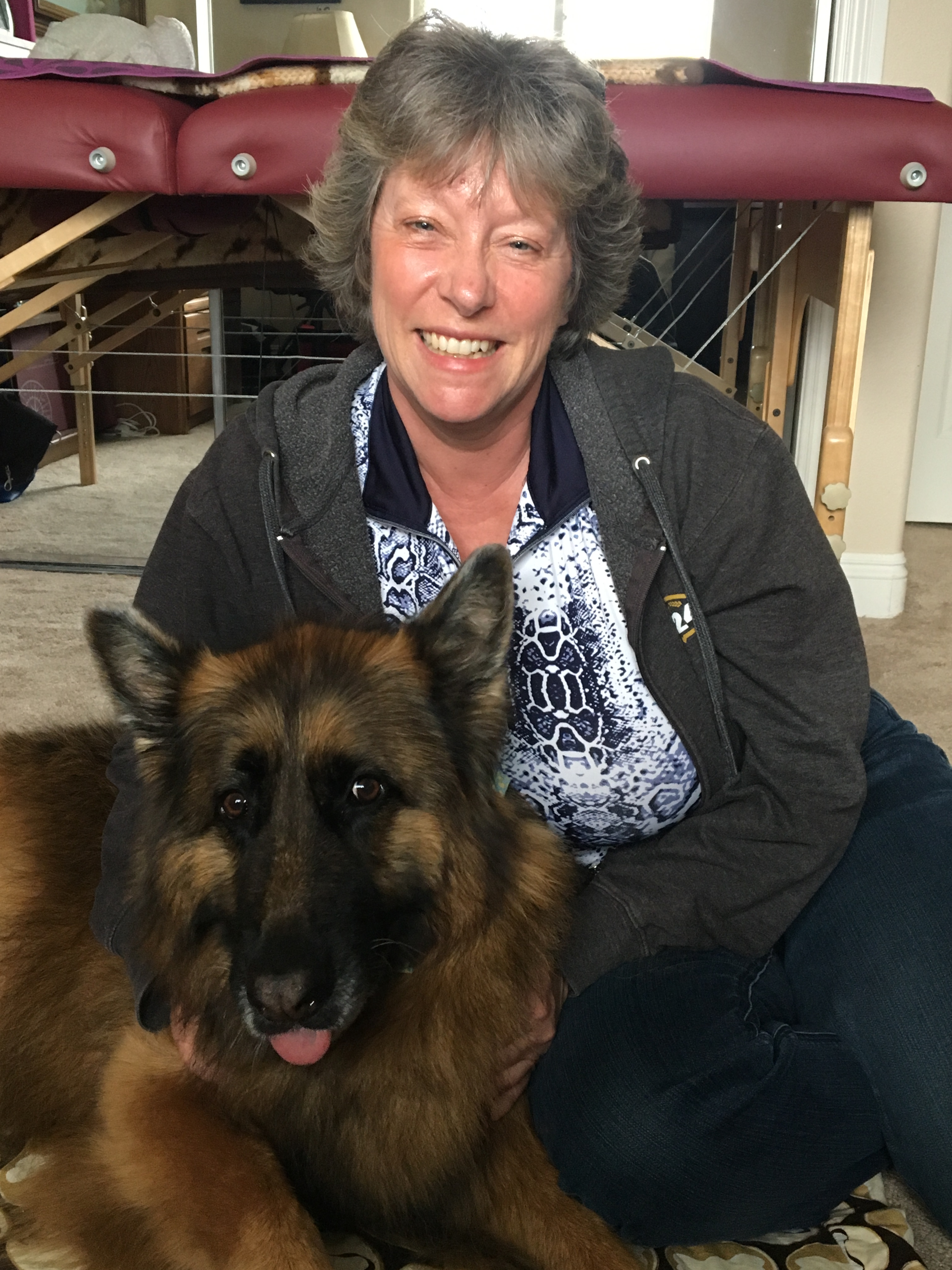
Ostara and BonnieOstara has been receiving massage for her hip dysplasia for quite some time.  She started getting weekly massages when she lived in Virginia, and continued with me while her owner lived in the Inland Empire.  Over a period of about 6 months, Ostara would visit with me one to two times per week for her massage.  We always did a full body massage to help those muscles that are compensating for her weaker hind limbs, but we spent time focusing on her hind limbs as well.  With joint supplements, a good diet, regular check up and care from her veterinarian and her massages, she has been managing pretty well.  Just like us, when the weather is colder, the joints are stiffer, and massage made a difference for her during those periods.  It was such a pleasure to massage Ostara and she is now back in Virginia again.  She was an excellent client and I so enjoyed having her visit.  Watching her receive pleasure and relief from achy muscles made my day complete.
To schedule a complimentary appointment to review your dog, and or cat, and their needs, please send us an e-mail at pawsandrelaxpm@gmail.com.  The source used for this blog is at https://pets.webmd.com/dogs/canine-hip-dysplasia.


A Torn ACL & Massage

A torn ACL is an issue that must be seen and evaluated by your veterinarian.  Once it has been diagnosed, there are options to choose from depending on how bad the tear.   My goal in this blog is to describe what it is and to discuss how massage can aid your pet during recovery from surgery, or if surgery is not required.

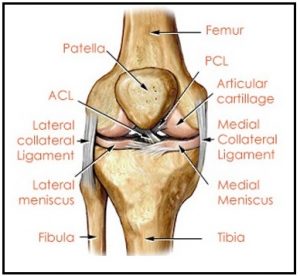
Ligaments are stretchy bands of tissue that connect bone to bone.  They work like rubber bands to hold the knee bones in the joint together when your dog moves.  The Anterior Cruciate Ligament (ACL) is one of four ligaments in the knee joint. The ACL is located in the center of the knee and is responsible for stabilizing the hind leg when your dog is bending, straightening and rotating his legs.

ACL

When an ACL is “sprained”, which is a minor injury, they tend to progressively worsen over time as they rarely heal on their own.  The longer treatment is delayed, the higher the risk of other complications like arthritis.

To help keep your dog comfortable after injuring the ACL, you will want to provide soft supportive bedding to help their joints, use ramps to help your dog get in and out of the car or onto the bed, put down carpets and secure rugs to help your dog have traction on slippery surfaces.

If your dog has surgery, or with a very minor ACL injury, the vet may prescribe low-impact excercises.  In both these cases, massage can be a support to other modalities.

When your dog has an injured limb they obviously use it less.  When they are using one limb less, other limbs, and muscles, take up the slack.  This can cause trigger, and stress, points to develop in the muscles of the limb being used more, and in the case of hind limb injuries, the muscles of the neck and shoulders can be strained.  Massage can help support those compensating muscles by keeping lactic acid from building up that can lead to pain, and down the road, arthritis.

For more information, and where material was obtained for this article, visit:

http://canna-pet.com/torn-acl-dogs/

http://pets.webmd.com/dogs/acl-injuries-in-dogs#1